
When Ocean was little, our apartment slowly changed around us…
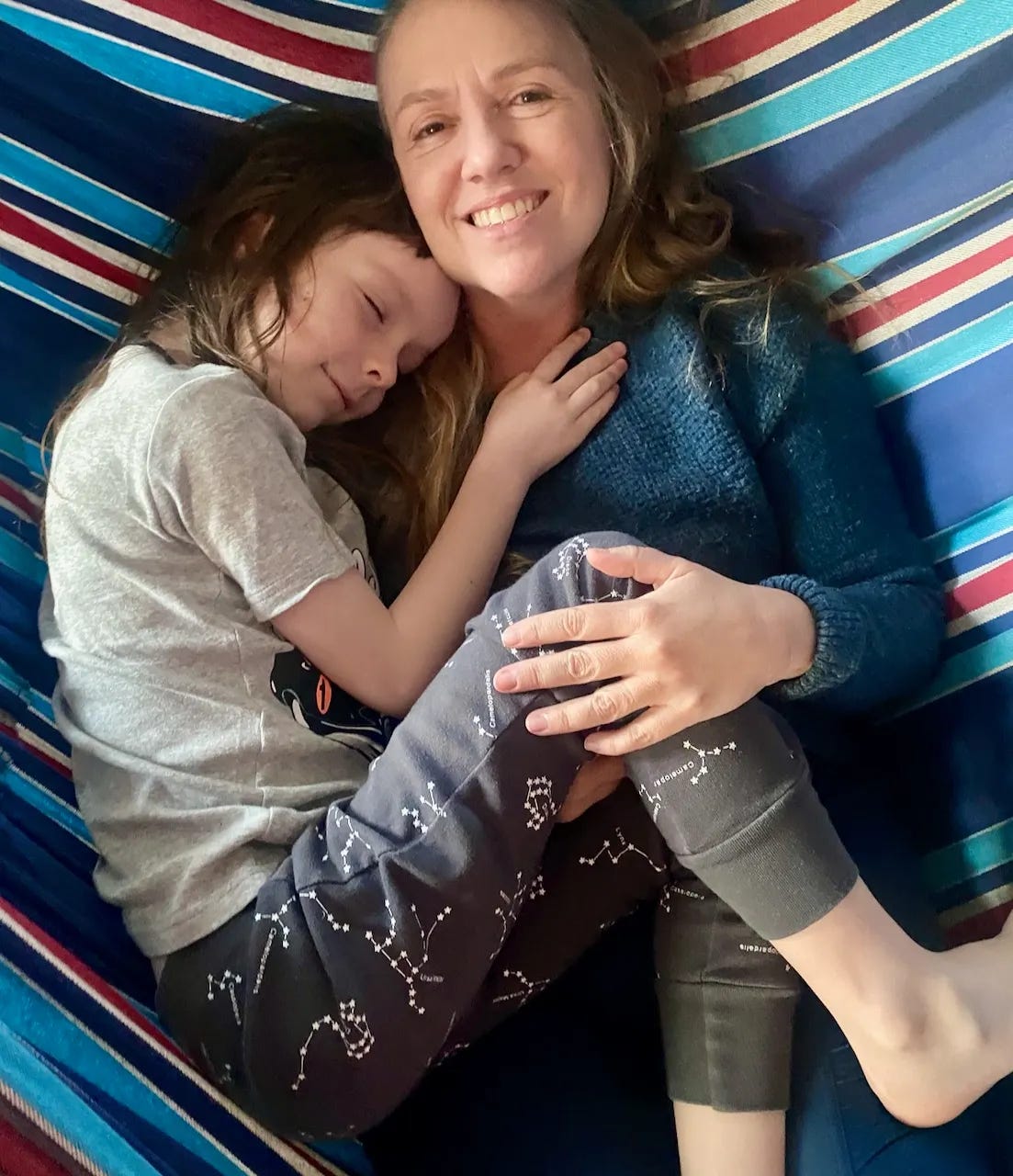
First, a hammock swing appeared, hanging from a beam in our living room.
Then a trampoline.
Then a Theraband stretched across the legs of Ocean's dining chair so he could kick while we ate dinner together.
These changes didn’t happen all at once. We made them one by one, as we learned what each of us needed.
Cardboard boxes became forts. Plants slowly filled the windowsills.
A collection of sensory tools came and went as Ocean’s needs changed.
Somewhere along the way, I stopped apologizing for the mess.
A home doesn’t have to be perfect to feel safe.
Like many parents of neurodivergent kids, I was grasping at straws.
Every recommendation from an occupational therapist felt full of possibility.
Maybe this sensory tool would help him sleep?
Maybe that one would make wearing socks easier?
Some things helped. Some didn’t.
It might have looked like we were creating a sensory-friendly home. But one small adjustment at a time, we were also learning how to make room for one another.
The first thing that changed wasn’t for Ocean.
It was for me.
I was forty and pregnant.
I went straight from morning sickness to reflux. Between the nausea and the heartburn, I could barely rest.
John surprised me with a hammock swing and hung it in my favorite corner of our living room. Nestled inside, I was fully supported, gently rocked, and upright just enough to keep my stomach happy.
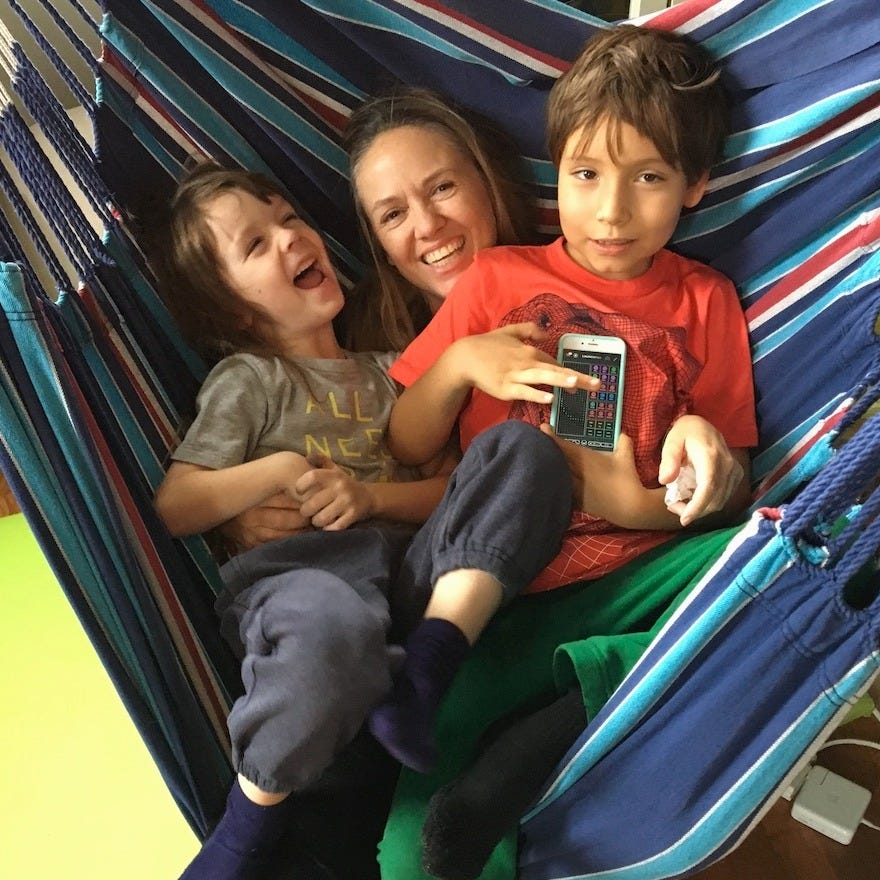
When Ocean was born, we cuddled him there too. The gentle swaying soothed him. Later, the hammock became a favorite of his cousins, then his neurodivergent friends.
That swing has held a lot of people over the years.
Some of Ocean’s favorite sensory supports weren’t things we bought at all.
One of the best was a giant cardboard box. He asked me to cut windows, decorated it, and crawled inside.
For the next few weeks, it became his private sanctuary.
I used to think supporting him meant finding the right tools.
Now I think it’s just as much about what we don’t fill our space with. Loud music, hectic schedules, heated rants during dinner…
Over time, I stopped asking what else we needed to buy and started asking a different question: What makes a home feel safe?
One winter, when Ocean was three, he suddenly couldn’t tolerate snaps or buttons
His perfectly good coat had become torture. He refused to put it on, which meant we couldn’t leave the house. Brooklyn winters are no joke.
I tried everything, then finally asked for help in a local online special needs parenting group.
There was no judgment.
No advice about behavior.
No questions asked.
Just one reply:
“I have one for you. Can you pick it up tomorrow?”
And just like that, we could leave the house again.
Ocean wore his ‘new’ coat without complaint.
What stayed with me was the feeling of being held by another parent who understood.
We each have a different nervous system and different needs.
What we’re creating is a home environment that works for our whole family.
This is what I remember most:
Cuddling together in the hammock swing.
The cardboard boxes and blanket forts.
The coat another parent generously passed on.
We all coexist in our Brooklyn apartment.
It was the first place we practiced inclusion.
I'd love to hear from you:
What makes your home feel safe?
A kinder future for our kids begins with kindness toward ourselves.