


I know, you’ve heard from me a lot recently. Maybe you love that? 😬
It’s been a wonderful podcast season, and it’s coming to a close. Some of your kids are already on summer break. You’re busy!
So here’s a song for you.
If you’re burnt out, stop here and enjoy.
"I know that I deserve your love, there's nothing I'm not worthy of!"
My husband John had the chance to see Hugh Jackman’s live Broadway show on Friday, which sadly had nothing to do with Wolverine. John was so excited that his body cooperated (he has Parkinson’s), but sad that they skipped one of his favorite songs…
This beautiful anthem, This Is Me, accompanied by clips from The Greatest Showman, gave me chills, and reminded me of the horrid laws targeting people with visible disabilities, and how self-advocates fought for the ADA.
This isn’t ancient history. These laws were still around when I was 5.
If you’re thinking this doesn’t apply to you or your kids, you’ve never had the cops called on you or your “normal looking” kid during a supermarket meltdown. The pervasive ableism that allowed these ugly laws makes it dangerous for people with invisible disabilities when they suddenly become visible.
Here’s a short article in National Geographic online by Ainsley Hawthorn (free but requires an email submission to read):
The history behind one of America‘s cruelest laws
“While the ugly laws themselves are no longer in effect—the last recorded arrest related to an ugly law was in 1974, their legacy continues to influence attitudes toward disability and public space.”
I was encouraged to read that “…bystanders would often intervene when police attempted an arrest, making enforcement challenging. For example, in 1936, when a Chicago police officer attempted to arrest Ben Lewis, a Black amputee, by kicking his good leg out from under him, four white onlookers attacked the policeman while hundreds of others rallied around them.”
While bystander advocacy is awesome, the laws “led to further marginalization by stripping disabled individuals of their right to self-determination and isolating them from the rest of society.”
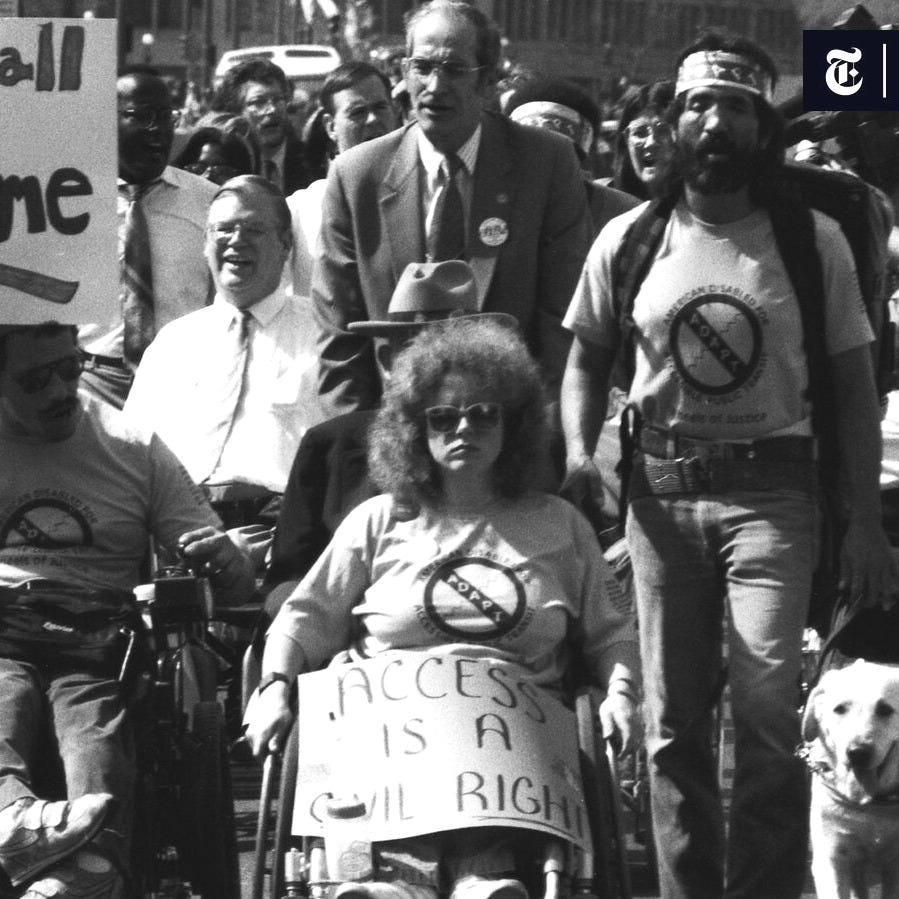
Here’s the best part:
“Disability advocates in the 1970s used the laws as a shocking example of discrimination that demonstrated their need for civil rights protections. Their activism led to the Americans with Disabilities Act of 1990, which requires businesses and governments to provide disability accommodations.”
Have a beautiful week!

