
If you missed last week’s post, read it here before continuing:
Polyvagal-Informed Strategies For a Calmer Family (Part 1)
Let’s Review
This is a challenging time to be a parent — and you are uniquely qualified to meet it. You can tune your brain toward contentment, confidence, and connection, so you can share that regulated state with your family.
80% of nervous system information travels from the body to the brain, not the other way around.
Not everything is an emergency, even when it feels that way.
Stress means you care — it’s part of living a meaningful life.
We need ways to release the stress that builds up in our bodies.
3 Positive Outcomes of Practicing Self-Regulation
Resilience: You grow stronger through challenge and can help your kids because you’ve experienced it yourself.
The Second Chicken Effect: When something unexpected happens, your child’s nervous system looks to yours for cues of safety or danger.
Modeling Calm: Teaching regulation starts with practicing it yourself. Even if your kids never try these tools, your calm nervous system helps theirs.
Attuning to your own nervous system simply means paying attention to what’s happening inside your body. Try it often throughout your day.
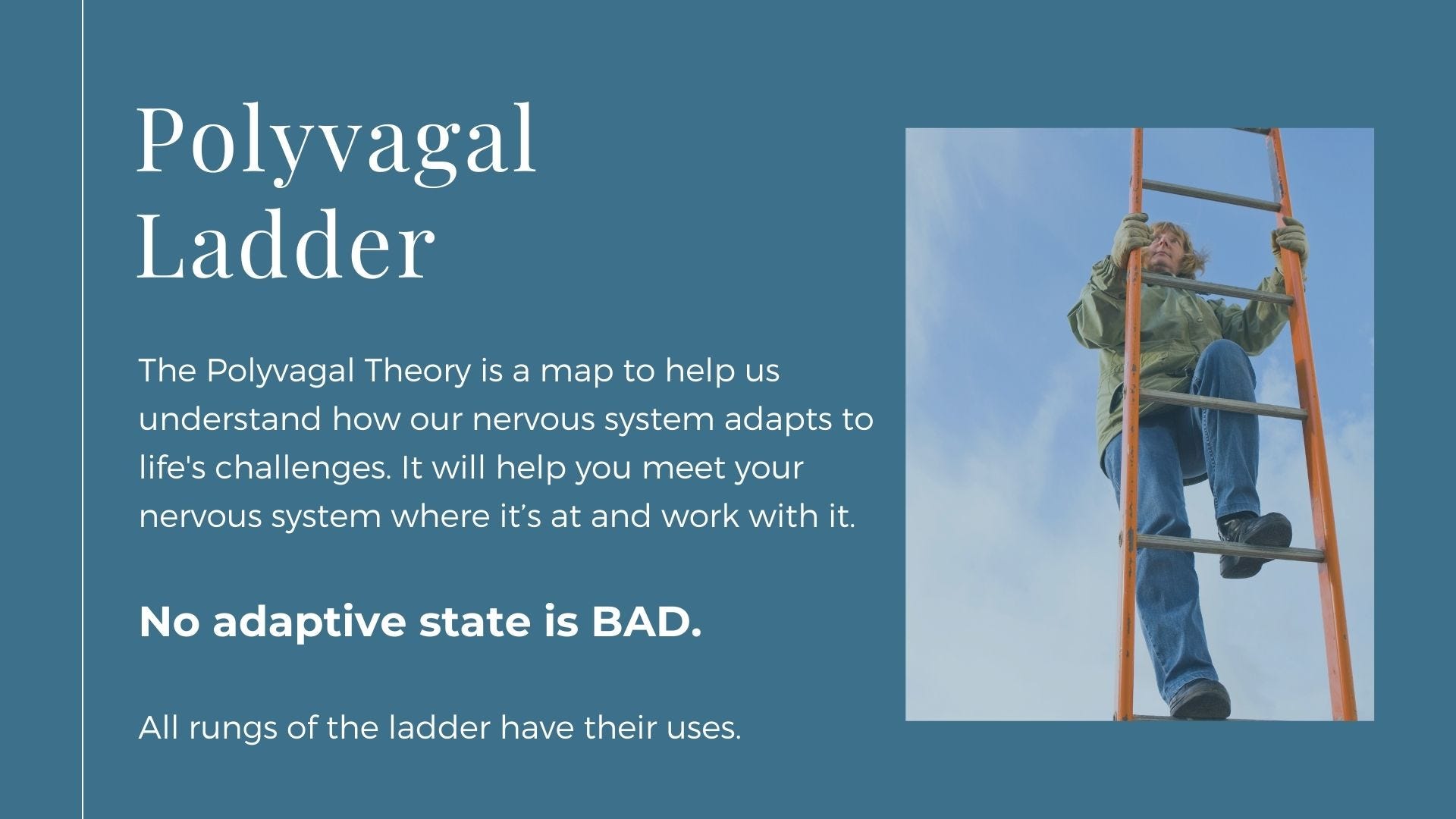
The Polyvagal Ladder: Meeting Your Nervous System Where It’s At
The polyvagal ladder is a map of how your nervous system adapts to different challenges. None of its states are “bad” — each has a purpose.
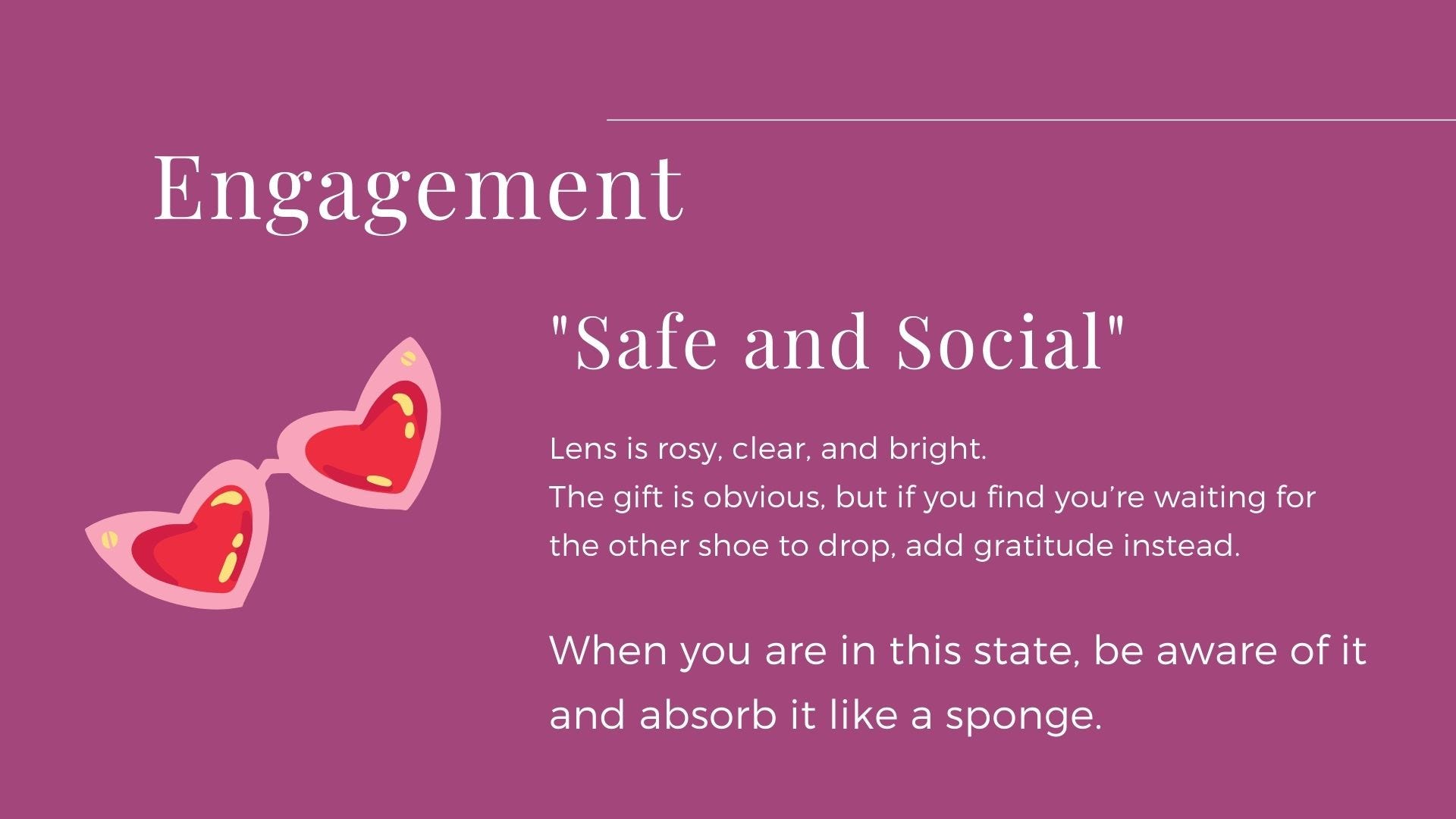
The Engaged State (Safe and Social)
Picture talking to your best friend about a happy memory or playing joyfully with your child. This is the safe and social state — connection and calm.
It’s like wearing rose-colored glasses: the world looks brighter and more open.
If you tend to wait for the other shoe to drop, try adding gratitude. Instead of thinking, “This won’t last,” tell yourself, “I’m grateful to be feeling this way.”
Our brains naturally focus on threats, so we need to intentionally absorb positive moments like a sponge. When we do, we make it easier to return to this state again.
Soak it up.
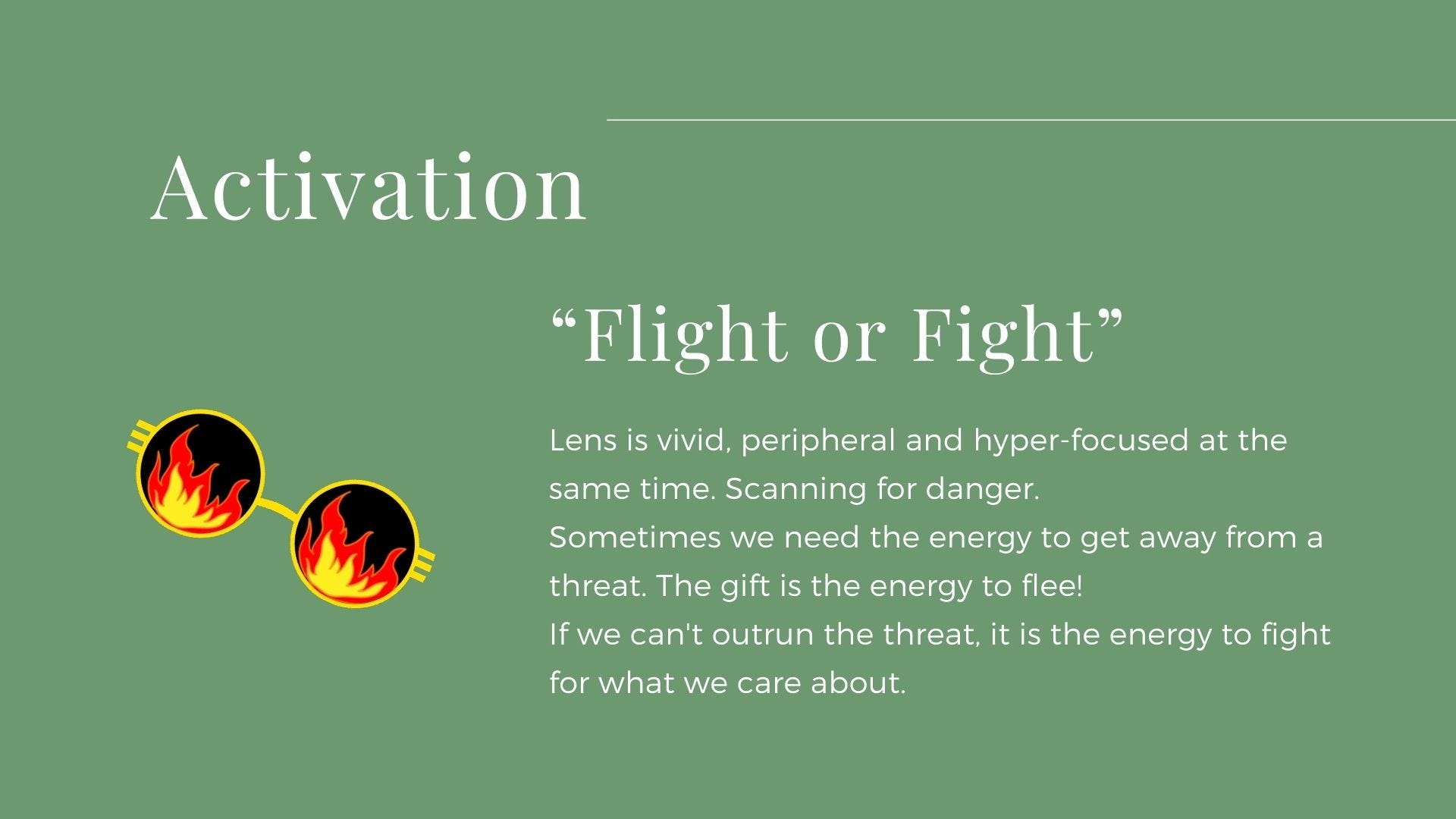
The Activated State (Fight or Flight)
When calm suddenly turns to threat, your body takes action. This is the activated or mobilized state — running from or fighting the danger.
The gift of this state is energy and focus.
Heart rate rises
Digestion slows
Senses sharpen
You’re ready to protect yourself and your loved ones. This is your body doing its job. Imagine if you didn’t have this stress response? Someone might “eat you for lunch.”
The Collapsed State (Shutdown or Freeze)
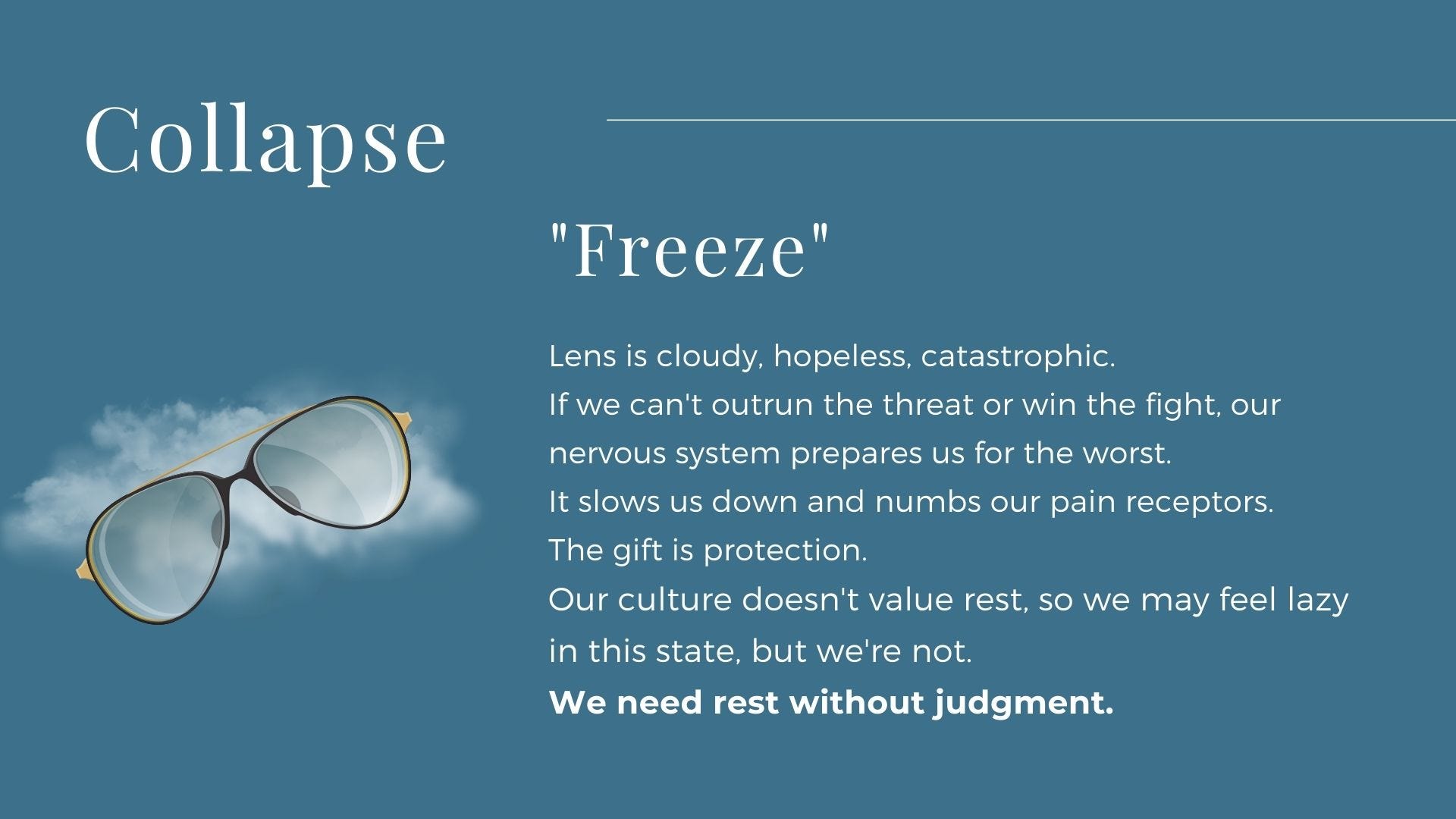
If running or fighting doesn’t work, your body moves to its last protective step: it shuts down. This is the collapsed or freeze state. You might feel numb, hopeless, or detached.
It’s like your glasses are smudged and cloudy — the same story seen through a different filter. This isn’t a choice. The primal part of your brain reacts automatically in a split second to viscerally sensing the threat level.
The gift of this state is protection and rest.
Our culture often undervalues rest, but it’s essential. You’re not lazy for needing to pause. You’re human.
Check In With Yourself
Pause for a moment.
What are you feeling right now?
What insights have come up for you?
Your mission is to notice which state you’re in, and how it fits the situation.
Ask yourself:
Which rung of the ladder am I on?
Is this reaction appropriate to what’s happening right now?
If not, what might be underneath it?
When we practice tuning in, we become better at answering,
“Am I safe right now?”
None of the states are bad. We just want to be in the one that fits the moment. You wouldn’t want to be calm and chatty with a bear chasing you!
How This Helps Your Kids
This Polyvagal-Informed Strategies Series helps you train your brain toward contentment, confidence, and connection so you can share that regulated state with your family.
When you practice these tools, your kids don’t have to.
They’ll feel the calm through you.
Next Sunday in Part 3, I’ll share practices for each rung of the ladder— including playful ways to help your kids engage. It’s one of the benefits for paid subscribers, who support the time it takes to research and write deep dives like this.
A kinder future for our kids begins with kindness toward ourselves.
Thank you for this