


In my last post, we explored why nervous system regulation matters for parents:

Now we’ll look at how those same skills can help us advocate for our children, stay grounded through meltdowns, and connect with the communities that keep us going.
Prefer to listen? Here’s the full interview with host Victoria Bennion of The Autism Mums, where we talked about practical tools for staying grounded even on the hardest days.
From Anxiety to Advocacy: Staying Grounded Within the System
If you’ve ever sat in an IEP or EHCP meeting, you know the tension that can fill the room. These meetings can determine your child’s access to support for years — and yet, as parents, we’re expected to stay composed, diplomatic, and articulate.
I shared with Victoria how hard that used to be for me:
“Going into an IEP meeting, I would often be extremely nervous. I would cry during the meeting. And I think it’s perfectly natural — because we’re the ones who live with the outcome. We’re more invested than anyone else in the room.”
The stress response in those moments isn’t weakness; it’s biology. Our nervous system reads the situation as high-stakes (which it is) and floods our bodies with adrenaline and cortisol. But if we bring all that stress with us into the meeting, it can be hard to advocate clearly.
That’s why nervous system regulation for autism parents isn’t just self-care, it’s advocacy strategy.
During the episode, I shared a lighthearted but surprisingly powerful practice:

“Make yourself as big as possible,” I said. “Spread your arms, make bear claws, stick out your tongue, and roar.”
Victoria laughed and joined in. It’s a technique I borrowed from the character Rebecca on the TV show Ted Lasso, and it helps! The movement signals to your body that you’re powerful and safe — that you belong in that room.
“We can excuse ourselves, go into the bathroom, and do it privately before the meeting. It helps us pull in that big, taking-up-space energy and release some of the stress so we can advocate from a clearer, more grounded place.”
Victoria’s response said it all:
“Those meetings can be really intimidating… You just can’t avoid feeling that stress. So if there are tools like this that help, that’s fantastic.”
Grounding yourself before stepping into advocacy spaces isn’t silencing your emotions, it’s honoring them. You’re showing up with love, with courage, and with your full presence. That’s what your child needs from you.
Simple Tools for Regulating Through Meltdowns
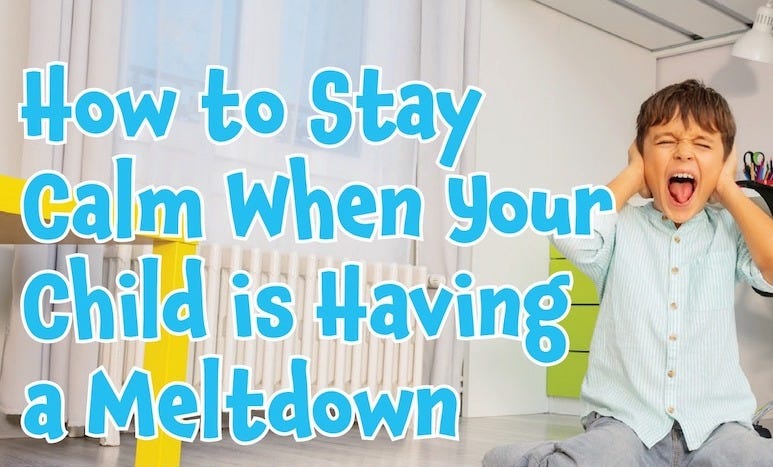
Meltdowns are part of life for many families with neurodivergent children. They’re not misbehavior, they’re a release valve when feelings grow bigger than self-regulation skills.
As parents, our instinct is often to fix the meltdown or to manage it quickly. But the best thing we can do is regulate ourselves.
As I shared with Victoria:
“Our kids’ feelings are often much bigger than their self-regulation skills. So often, we have to be the ones co-regulating with them — and if we’re not self-regulated, it’s very hard to do.”
That’s why I created my Mindful Meltdown Cheat Sheet, a one-page guide with quick, grounding tools for parents. But I always emphasize one key point: practice before the meltdown.
“Because you know it’s going to happen eventually,” I said. “If you practice when things are calm, you’ll have something ready when emotions run high.”
These tools are simple — a single-word affirmation, a grounding breath.... They might sound small, but they help your nervous system send a clear message: I’m safe enough to stay present. When you stay present, your child feels that too. That’s the essence of co-regulation — not fixing, not forcing calm, but offering a steady anchor in the storm.
Victoria put it beautifully at the end of our chat:
“That sounds like such a useful tool. I’ve never come across something like it before — I’ll be downloading it myself.”
You can download the Mindful Meltdown Cheat Sheet, and keep it on your fridge or phone for quick reminders when you need them most.
You Don’t Have to Do This Alone
Victoria said it best:
“I learned from other parents. There’s no roadmap once your child isn’t fitting that mold, but the parents ahead of me told me what to do next.”
That’s the power of connection. Nervous system regulation for autism parents isn’t just about deep breaths and mindfulness — it’s about community as co-regulation. When we share stories, laugh about the absurdity, or even just say, “me too,” our bodies relax. We remember that we’re safe here. That safety ripples outward to our kids, our partners, our classrooms, and our wider communities.
When we find other parents who understand, we remember that we’re part of something bigger. If you take one thing from this conversation, let it be this:
You don’t have to be perfectly calm to be a good parent. You just have to come back to yourself, again and again, with compassion.
Want a simple place to start?
Download the free Mindful Meltdown Cheat Sheet — it’s a one-page reminder that even small moments of regulation can change everything.
A kinder future for our kids begins with kindness toward ourselves.
Great to be reminded of some of these useful techniques you shared Kate. Feel I may need them this week! - Victoria
When my ADHD daughter was 15, she ran away after a traumatic incident. She was found hours later and safe. What I learned was that she ran because she did not feel emotionally safe at home enough to share her pain and her needs. I had to learn many of the strategies you've listed to become the calm she needed in her storms, proving its never too late to try.